'/%3e%3cpath%20d='M31%2038c0-8%206-14%2014-14h38c8%200%2014%206%2014%2014v52c0%208-6%2014-14%2014H45c-8%200-14-6-14-14V38z'%20fill='url(%23tmPanel)'%20filter='url(%23tmShadow)'/%3e%3cpath%20d='M44%2044h40'%20fill='none'%20stroke='%23f97316'%20stroke-width='8'%20stroke-linecap='round'/%3e%3cpath%20d='M44%2061h24'%20fill='none'%20stroke='%23fdba74'%20stroke-width='8'%20stroke-linecap='round'/%3e%3cpath%20d='M43%2087l13-14%2011%2010%2017-21%202%2025H43z'%20fill='%23fb923c'/%3e%3ccircle%20cx='84'%20cy='58'%20r='6'%20fill='%23f97316'/%3e%3cpath%20d='M77%2091l16-18%2014%2014'%20fill='none'%20stroke='%2316a34a'%20stroke-width='7'%20stroke-linecap='round'%20stroke-linejoin='round'/%3e%3cpath%20d='M99%2074h-6v-6'%20fill='none'%20stroke='%2316a34a'%20stroke-width='7'%20stroke-linecap='round'%20stroke-linejoin='round'/%3e%3cpath%20d='M30%2034c8-10%2020-15%2034-15s26%205%2034%2015'%20fill='none'%20stroke='%23fff7ed'%20stroke-width='5'%20stroke-linecap='round'%20opacity='.92'/%3e%3cpath%20d='M27%2096c9%208%2021%2012%2037%2012s28-4%2037-12'%20fill='none'%20stroke='%23fff7ed'%20stroke-width='5'%20stroke-linecap='round'%20opacity='.72'/%3e%3c/svg%3e)
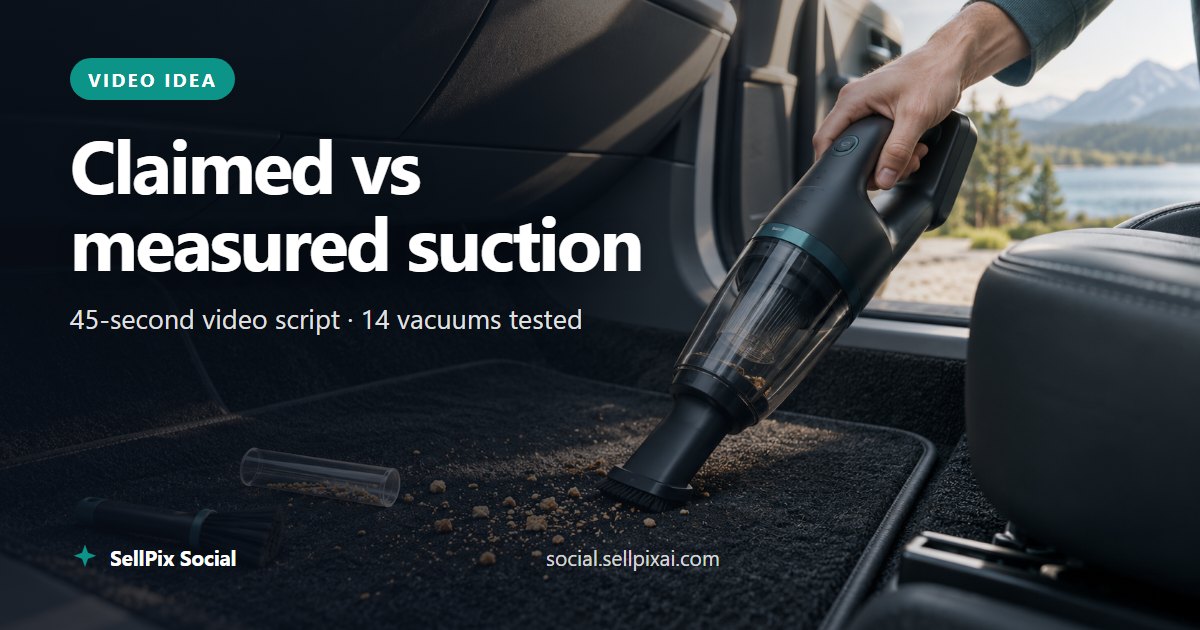
Video idea: car vacuum "claimed vs measured" suction (45-second script)
Use a published measurement test to show how far a headline suction number can be from the pressure a tester actually recorded, with a fair-play caveat and two vacuums compared.
Quick answer: Put one big claimed number next to one measured number from a named test and let the gap speak. Then be fair: one test, one unit, one method. The measured result is a data point, not a verdict, and a tool with a small nozzle can still lift heavy debris.
At a glance
- A NUMBER GAP IS THE HOOK – "19,000 Pa claimed" versus "almost nothing measured" is a ten-second story.
- NAMED SOURCE, NAMED METHOD – the test used a pressure rig built from PVC pipe; say so on screen.
- FAIR PLAY BUILT IN – the same test found that a small-nozzle model still picked up heavy nuts, so suction in pascals is not the whole story.
- TWO REAL OPTIONS – an all-in-one cordless hand vacuum and a stronger tool-battery vacuum.
- BUDGET HONESTY – the stronger vacuum is "tool only": show the battery you need to add.
What the reference video does well
The reference is the YouTube video Best Car Vacuum 2026, Cordless vs Shop Vacs Mega Test!. The uploader states it is not sponsored and buys the products. They tested 14 vacuums (five corded, nine cordless) with a pressure rig for suction and airflow, then combined the two into air watts, and added a "nut pickup" test, a sand test, crevice-tool and battery-life tests, finishing with a heat map. Useful borrowings: a measurement you can see on screen, a second test that checks the first (nuts), and a final recommendation per use case rather than one winner. A few of its numbers: Dustbuster about 680 to 700 Pa (53 CFM); DEWALT 20V about 1,295 Pa (73 CFM); a corded 5-gallon shop vac about 6,797 Pa; one mini vacuum marketed at 19,000 Pa recorded almost no suction on the rig, though it picked up all ten nuts.
The 45-second shot list
| Time | Shot | Voice-over |
|---|---|---|
| 0-4 s | Screen capture of a maker's listing with the "19,000 Pa" claim circled | "One mini car vacuum claims 19,000 pascals." |
| 4-14 s | Screen recording of the test's rig and the chart | "A tester measured 14 vacuums with a pressure rig. That one recorded almost nothing." |
| 14-26 s | Bar chart: Dustbuster about 680, DEWALT about 1,295, corded shop vac about 6,800 | "The cordless Dustbuster: about 680. The DEWALT 20-volt: about 1,300. A corded shop vac: almost 7,000." |
| 26-36 s | Text card: "One test. One unit each. The mini still lifted heavy nuts." | "Fair is fair: one test, and small nozzles can still lift things." |
| 36-45 s | Both vacuums, link sticker | "For quick crumbs: the Dustbuster. For more power: the DEWALT, battery not included." |
Caption, hashtags and disclosure
SellPix Social is not currently enrolled in Amazon Associates. These are standard Amazon.com product links; we do not earn commissions from them. Compare a maker's airflow specification with measurements from one published 14-vacuum test; one test is not a universal verdict.
#carvacuum #cardetailing #cleaningtips #cartok #carcare
The products to feature
BLACK+DECKER dustbuster AdvancedClean Cordless Handheld Vacuum (CHV1410L)
A 2.6 lb cordless hand vacuum with a rotating nozzle, pull-out crevice tool and washable dirt bowl; about 11 minutes of runtime.
DEWALT 20V Cordless Dry Hand Vacuum with HEPA Filter (DCV501HB), Tool Only
A 20V tool-battery hand vacuum with HEPA filtration, six accessories and an LED light. The battery and charger are not included.
How they compare
| BLACK+DECKER dustbuster AdvancedClean | DEWALT 20V DCV501HB (tool only) | |
|---|---|---|
| Measured suction (reference test) | About 680 to 700 Pa | About 1,295 Pa |
| Measured airflow (reference test) | 53 CFM | 73 CFM |
| Power | Built-in 16V lithium battery, about 11 minutes (maker) | Needs a 20V MAX battery and charger (not included) |
| Filter | Washable | HEPA |
| Strength | Simple, all-in-one, light | Stronger suction, crevice tools, LED light |
Compliance checklist before you post
- These draft captions describe standard, non-commission Amazon links. If the account later joins an affiliate programme or receives payment or free products, update the disclosure before publishing.
- Turn on TikTok, Instagram or YouTube's paid-partnership or commercial-content label if you are paid or receive free products.
- Say only what you can show on camera. If you did not test it yourself, say "according to the maker" or credit the test.
- Do not quote prices, savings, ratings or sales-rank badges: they change often and need fresh verification.
- Link to the product page itself, not to a shortened or cloaked URL.
- Quote the numbers as the test's measurements, name the test, and do not imply the maker's claim is false beyond what the test showed.
FAQ
Why does a corded shop vac measure so much higher?
Wall power can run a larger motor continuously, so it holds more suction than a small battery. That is also why the test crowns a shop vac for deep cleans.
Is a cordless hand vacuum enough for a car?
For crumbs, dust and pet hair on mats, often yes. The reference test suggests stepping up in power for sand and ground-in dirt.
What does "tool only" mean?
It means the vacuum is sold without a battery or charger. Add the cost of both before you compare it with an all-in-one model.
Are pascals the only thing that matters?
No. The same test also measured airflow, runtime, attachments and real-world pick-up, because suction alone does not predict results.
How we researched this
We did not buy or test these products. This article is a research summary: the product facts come from the Amazon listings and the makers' pages (read on 2026-10-09), and anything we call "tested" is credited to the person or publication that tested it. Prices, ratings and stock are not shown because they change daily; check the Amazon page. The numbers in this article are the reference test's own measurements and are not our results.
Sources and reference video
- Reference video: YouTube, "Best Car Vacuum 2026, Cordless vs Shop Vacs Mega Test!" (channel name not shown in the page data we could read)
- Amazon product pages: BLACK+DECKER dustbuster CHV1410L (ASIN B006LXOJC0), DEWALT DCV501HB (ASIN B09YXZ4L8T); maker page: DEWALT 20V Cordless Dry Hand Vacuum