'/%3e%3cpath%20d='M31%2038c0-8%206-14%2014-14h38c8%200%2014%206%2014%2014v52c0%208-6%2014-14%2014H45c-8%200-14-6-14-14V38z'%20fill='url(%23tmPanel)'%20filter='url(%23tmShadow)'/%3e%3cpath%20d='M44%2044h40'%20fill='none'%20stroke='%23f97316'%20stroke-width='8'%20stroke-linecap='round'/%3e%3cpath%20d='M44%2061h24'%20fill='none'%20stroke='%23fdba74'%20stroke-width='8'%20stroke-linecap='round'/%3e%3cpath%20d='M43%2087l13-14%2011%2010%2017-21%202%2025H43z'%20fill='%23fb923c'/%3e%3ccircle%20cx='84'%20cy='58'%20r='6'%20fill='%23f97316'/%3e%3cpath%20d='M77%2091l16-18%2014%2014'%20fill='none'%20stroke='%2316a34a'%20stroke-width='7'%20stroke-linecap='round'%20stroke-linejoin='round'/%3e%3cpath%20d='M99%2074h-6v-6'%20fill='none'%20stroke='%2316a34a'%20stroke-width='7'%20stroke-linecap='round'%20stroke-linejoin='round'/%3e%3cpath%20d='M30%2034c8-10%2020-15%2034-15s26%205%2034%2015'%20fill='none'%20stroke='%23fff7ed'%20stroke-width='5'%20stroke-linecap='round'%20opacity='.92'/%3e%3cpath%20d='M27%2096c9%208%2021%2012%2037%2012s28-4%2037-12'%20fill='none'%20stroke='%23fff7ed'%20stroke-width='5'%20stroke-linecap='round'%20opacity='.72'/%3e%3c/svg%3e)
Car vacuum suction numbers: what pascals and CFM really tell you
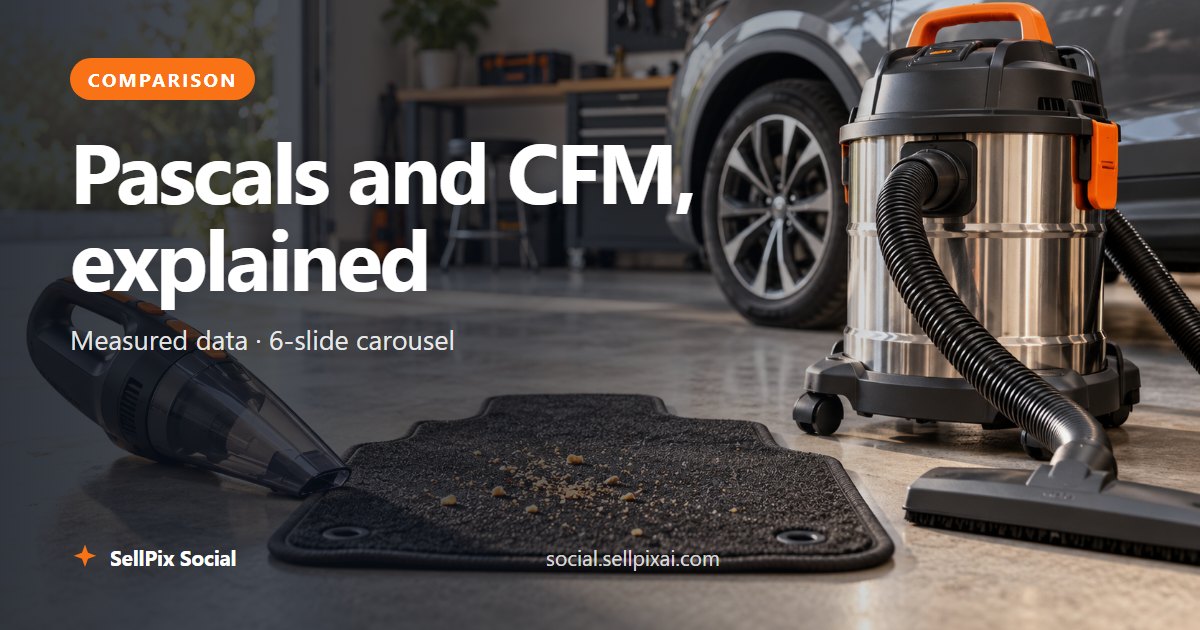
A 14-vacuum measurement test shows how suction in pascals, airflow in CFM and real pick-up relate. Read the chart, then decide between a hand vacuum, a tool-battery vacuum and a shop vac.
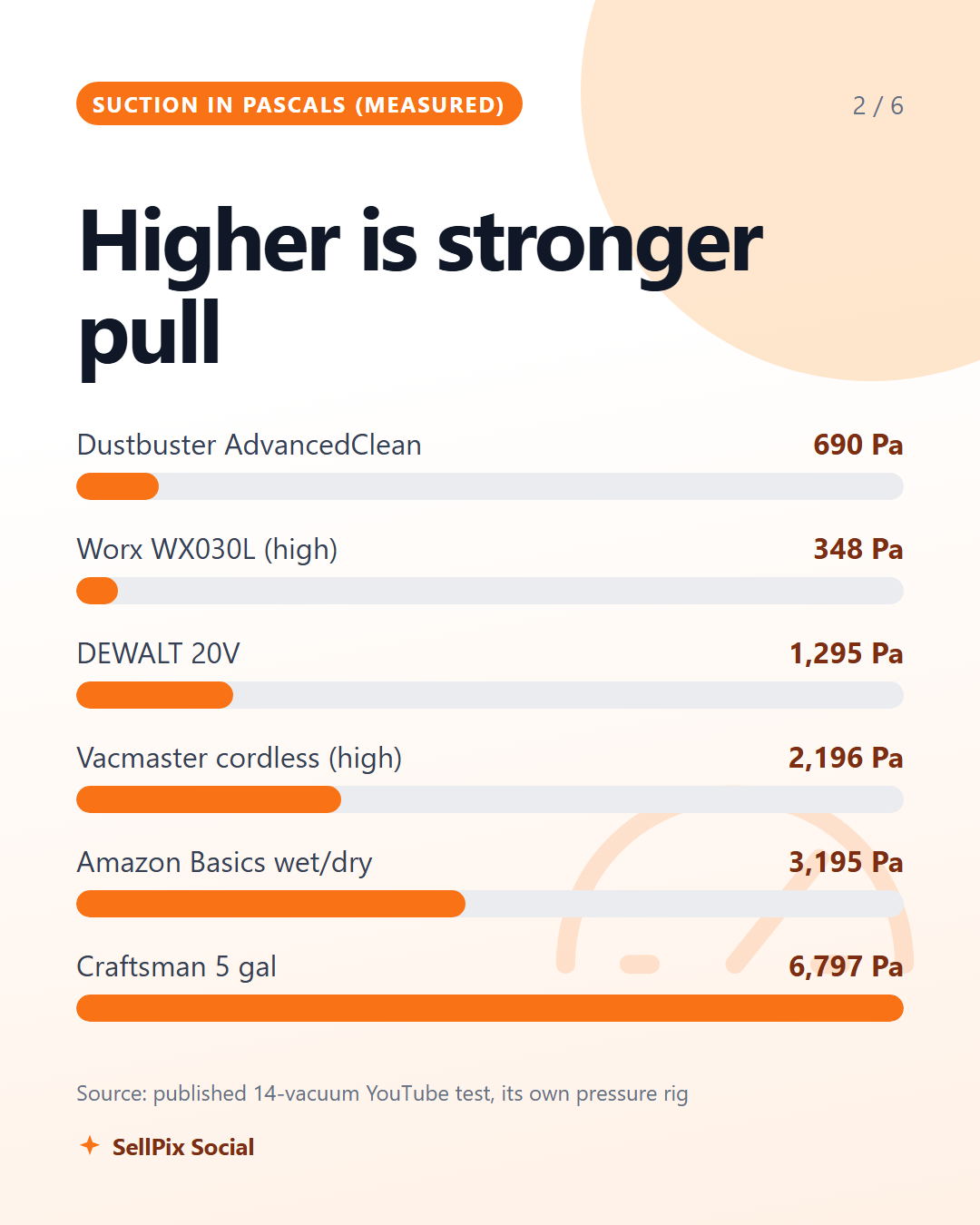
Quick answer: Suction in pascals is how hard a vacuum pulls; airflow in CFM is how much air it moves; air watts combine them. In one published 14-vacuum test, a cordless hand vacuum measured about 690 Pa, a tool-battery vacuum about 1,295 Pa and a corded 5-gallon shop vac about 6,797 Pa. Match the number to the mess: crumbs need little, ground-in sand needs more.
At a glance
- ONE TEST, MANY NUMBERS – the data below is from a single published test (14 vacuums, a pressure rig built from PVC pipe), not from us.
- A CLAIM IS NOT A MEASUREMENT – listings often show headline numbers in different units; a measured number is easier to compare.
- TWO NUMBERS, ONE STORY – pascals and CFM together tell you more than either alone.
- REAL PICK-UP TESTS – the same test also vacuumed nuts and sand, and checked crevice tools and battery life.
- POST-READY – six slides with bar charts.
What the units mean
- Pascals (Pa): the pressure difference the vacuum creates, shown on the tester's rig as inches of water. More pascals means more pulling force at a sealed opening.
- CFM: cubic feet of air moved per minute.
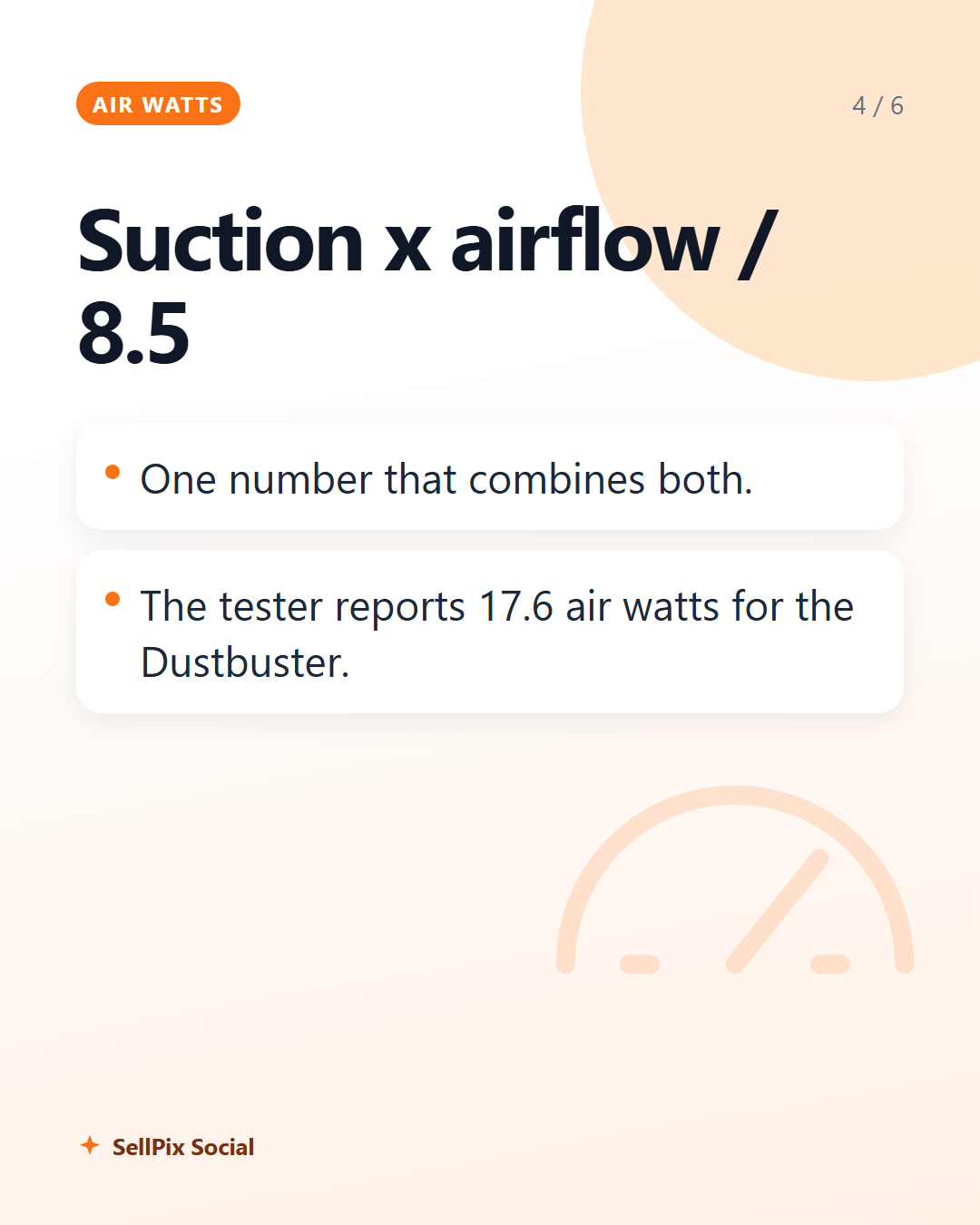
- Air watts: the tester's combined score, calculated as suction times airflow divided by 8.5.
Measured results from the reference test
| Vacuum | Suction | Airflow |
|---|---|---|
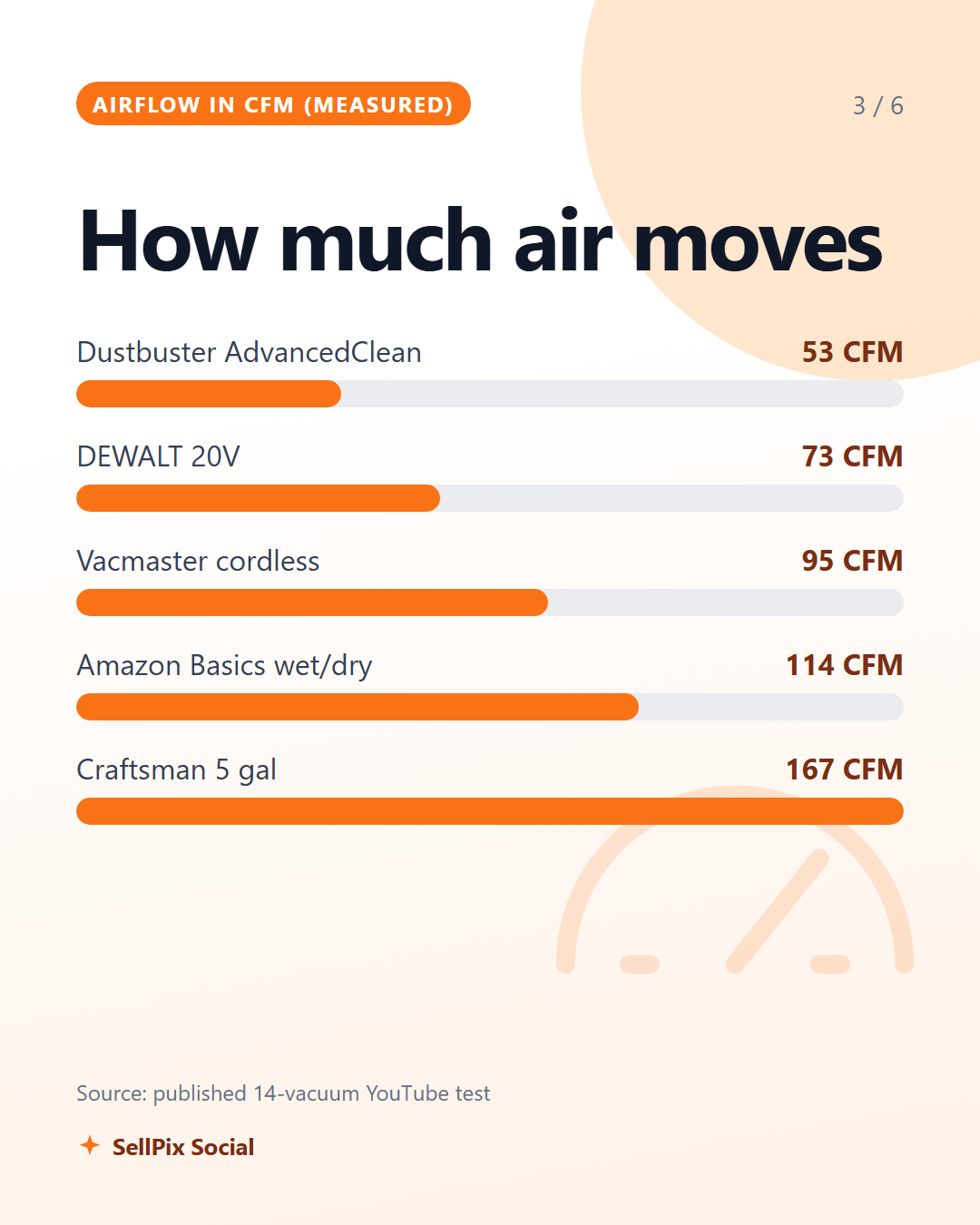
| BLACK+DECKER dustbuster AdvancedClean | About 680 to 700 Pa | 53 CFM |
| Worx WX030L (high setting) | 348 Pa | not stated here |
| DEWALT 20V (tool, third-party battery used) | 1,295 Pa | 73 CFM |
| Vacmaster 4 gallon cordless (high) | 2,196 Pa | 95 CFM |
| Amazon Basics corded wet/dry | 3,195 Pa | 114 CFM |
| Craftsman 5 gallon corded | 6,797 Pa | 167 CFM |
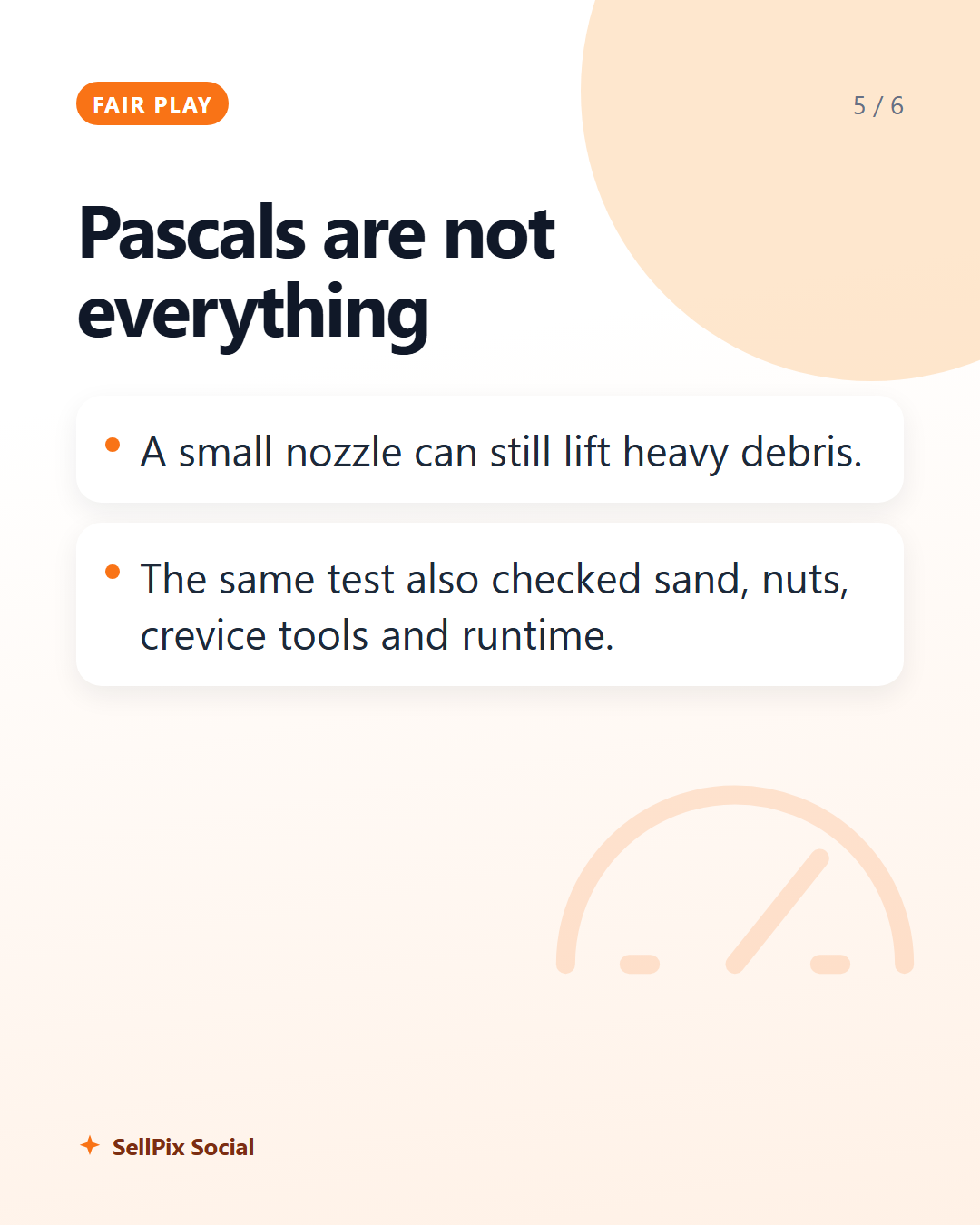
Several small, popular models measured below 350 Pa on the rig, and one mini vacuum marketed with a 19,000 Pa claim recorded almost no suction on the rig, yet still picked up all ten test nuts. That is why the tester also ran real pick-up tests rather than relying on pascals alone.
Carousel kit: ready to post
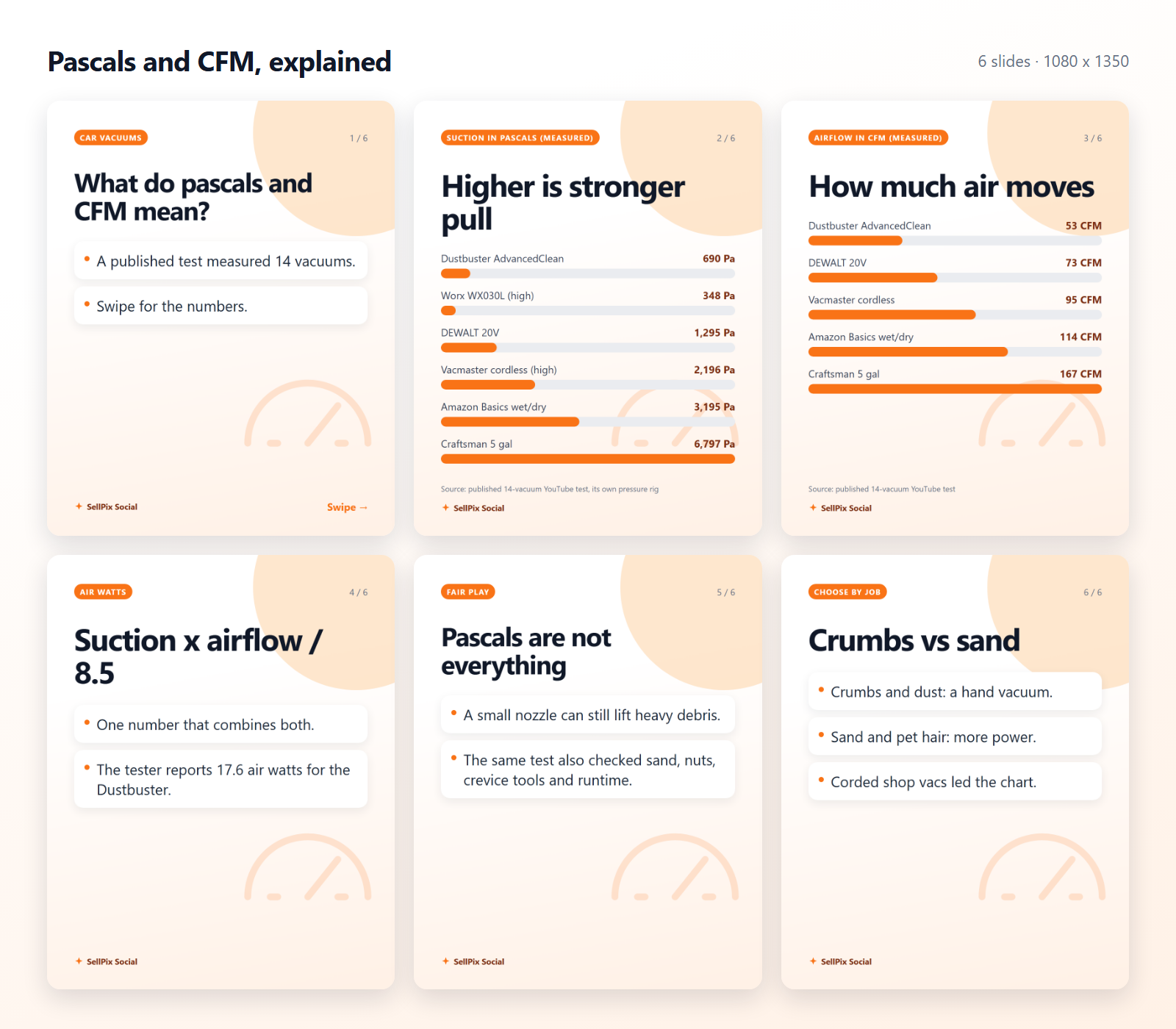
Download each slide as a 1080 x 1350 image: slide 1, slide 2, slide 3, slide 4, slide 5, slide 6.
The kit fits TikTok photo mode (up to 35 images, title up to 90 characters) and an Instagram carousel (up to 10 images, caption up to 2,200 characters and up to 30 hashtags).
SellPix Social is not currently enrolled in Amazon Associates. These are standard Amazon.com product links; we do not earn commissions from them. Pascals, CFM and air watts, explained with data from a published 14-vacuum test. #carvacuum #cardetailing #carcare #cleaningtips
Two options for a car
BLACK+DECKER dustbuster AdvancedClean Cordless Handheld Vacuum (CHV1410L)
A 2.6 lb cordless hand vacuum with a rotating nozzle, pull-out crevice tool and washable dirt bowl; about 11 minutes of runtime.
DEWALT 20V Cordless Dry Hand Vacuum with HEPA Filter (DCV501HB), Tool Only
A 20V tool-battery hand vacuum with HEPA filtration, six accessories and an LED light. The battery and charger are not included.
Which kind should you choose?
| Cordless hand vacuum | Tool-battery vacuum | Corded wet/dry shop vac | |
|---|---|---|---|
| Example here | Dustbuster AdvancedClean | DEWALT DCV501HB | Craftsman 5 gal (in the test) |
| Measured suction | About 690 Pa | About 1,295 Pa | About 6,797 Pa |
| Convenience | Highest | High if you own the batteries | Needs an outlet and storage |
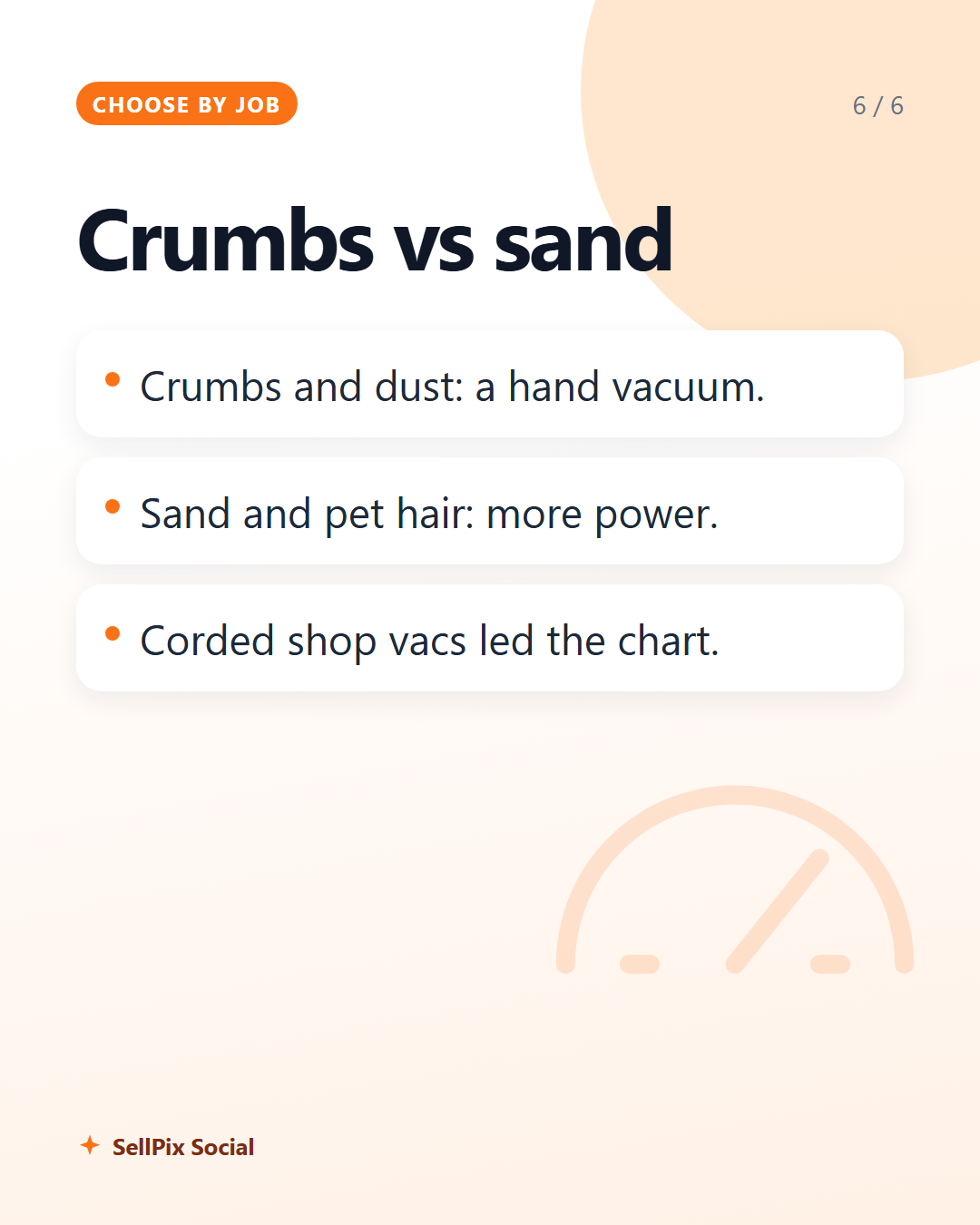
| Best for | Quick crumbs and dust | Stronger clean-ups | Deep cleans and wet spills |
FAQ
What is a good suction number for a car vacuum?
It depends on the mess. In the reference test the cordless hand vacuum was the strongest of the lower-powered group at about 690 Pa, while shop vacs reached thousands of pascals.
Is CFM more important than pascals?
Neither alone. The tester combined them as air watts and also ran pick-up tests.
Does a tool-only vacuum include a battery?
No. The DEWALT DCV501HB on Amazon is listed as battery not included.
Can I trust the numbers on the box?
Makers publish different units and conditions, so compare measured results from the same test when you can.
How we researched this
We did not buy or test these products. This guide is a research summary: product facts come from the Amazon listings and the makers' pages (read on 2026-10-09), and anything we call "tested" is credited to the person or publication that tested it. Prices, ratings and stock are not shown because they change daily; check the Amazon page. All measurements in this article are the reference test's results, not ours; they describe the units that tester bought and one measurement method.
Sources
- Reference video: YouTube, "Best Car Vacuum 2026, Cordless vs Shop Vacs Mega Test!" (channel name not shown in the page data we could read)
- DEWALT DCV501HB maker page; BLACK+DECKER CHV1410L maker page
- Amazon product pages: BLACK+DECKER dustbuster CHV1410L (ASIN B006LXOJC0), DEWALT DCV501HB (ASIN B09YXZ4L8T)