'/%3e%3cpath%20d='M31%2038c0-8%206-14%2014-14h38c8%200%2014%206%2014%2014v52c0%208-6%2014-14%2014H45c-8%200-14-6-14-14V38z'%20fill='url(%23tmPanel)'%20filter='url(%23tmShadow)'/%3e%3cpath%20d='M44%2044h40'%20fill='none'%20stroke='%23f97316'%20stroke-width='8'%20stroke-linecap='round'/%3e%3cpath%20d='M44%2061h24'%20fill='none'%20stroke='%23fdba74'%20stroke-width='8'%20stroke-linecap='round'/%3e%3cpath%20d='M43%2087l13-14%2011%2010%2017-21%202%2025H43z'%20fill='%23fb923c'/%3e%3ccircle%20cx='84'%20cy='58'%20r='6'%20fill='%23f97316'/%3e%3cpath%20d='M77%2091l16-18%2014%2014'%20fill='none'%20stroke='%2316a34a'%20stroke-width='7'%20stroke-linecap='round'%20stroke-linejoin='round'/%3e%3cpath%20d='M99%2074h-6v-6'%20fill='none'%20stroke='%2316a34a'%20stroke-width='7'%20stroke-linecap='round'%20stroke-linejoin='round'/%3e%3cpath%20d='M30%2034c8-10%2020-15%2034-15s26%205%2034%2015'%20fill='none'%20stroke='%23fff7ed'%20stroke-width='5'%20stroke-linecap='round'%20opacity='.92'/%3e%3cpath%20d='M27%2096c9%208%2021%2012%2037%2012s28-4%2037-12'%20fill='none'%20stroke='%23fff7ed'%20stroke-width='5'%20stroke-linecap='round'%20opacity='.72'/%3e%3c/svg%3e)
Dog car restraint and Highway Code rule 57: harness, crate or dog guard?
Rule 57 asks drivers to restrain dogs so they cannot distract you or be hurt if you stop quickly, and names four ways to do it. This guide matches each option to your car and dog, explains how to read crash-test claims, and compares two seat-belt harnesses sold on Amazon.co.uk.
Quick answer: Highway Code rule 57 says dogs should be restrained in a vehicle so they cannot distract you or injure you, or themselves, if you stop quickly, and it names a seat belt harness, pet carrier, dog cage or dog guard as ways to do it. For most dogs in the back seat of a hatchback or saloon, a well-fitted seat-belt harness is the simplest choice. In an estate or SUV with a large dog, a crate in the boot or a fitted dog guard often works better. Keep dogs out of the front passenger seat.
What rule 57 actually says
GOV.UK publishes the Highway Code rules about animals (rules 47 to 58, page last updated 22 October 2025). Rule 57 reads: "When in a vehicle make sure dogs or other animals are suitably restrained so they cannot distract you while you are driving or injure you, or themselves, if you stop quickly. A seat belt harness, pet carrier, dog cage or dog guard are ways of restraining animals in cars."
Two points are worth getting right. First, the rule is advisory wording, not a "MUST" rule. The Code's introduction explains that only rules using MUST or MUST NOT are legal requirements, and that breaking other rules will not on its own lead to prosecution. Second, the same introduction says the Code may be used in evidence in court proceedings under the Traffic Acts, including rules with advisory wording. So an unrestrained dog is not a separate offence in itself, but ignoring rule 57 can count against you if something goes wrong. Your car insurance policy wording is also worth a read, because insurers set their own conditions.
Note also that the rule names four methods and does not certify any product. A listing that calls a harness "Rule 57 compliant" is describing the type of restraint, not an official approval.
The four options, matched to your car
| Option | Best fit | Watch out for |
|---|---|---|
| Seat belt harness | Back seat of any car; small to large dogs that will settle lying or sitting | Exact girth sizing; the tether or belt route the maker shows; chewing |
| Pet carrier | Small dogs and cats on the back seat or footwell | Secure the carrier itself so it cannot fly forward |
| Dog cage (crate) | Estates, SUVs and vans with a boot big enough for the dog to stand and turn | Strap or anchor the crate; check the boot lid closes without pressing on it |
| Dog guard | Larger dogs travelling loose in a boot behind the last row | A guard stops the dog coming forward but does not hold the dog still |
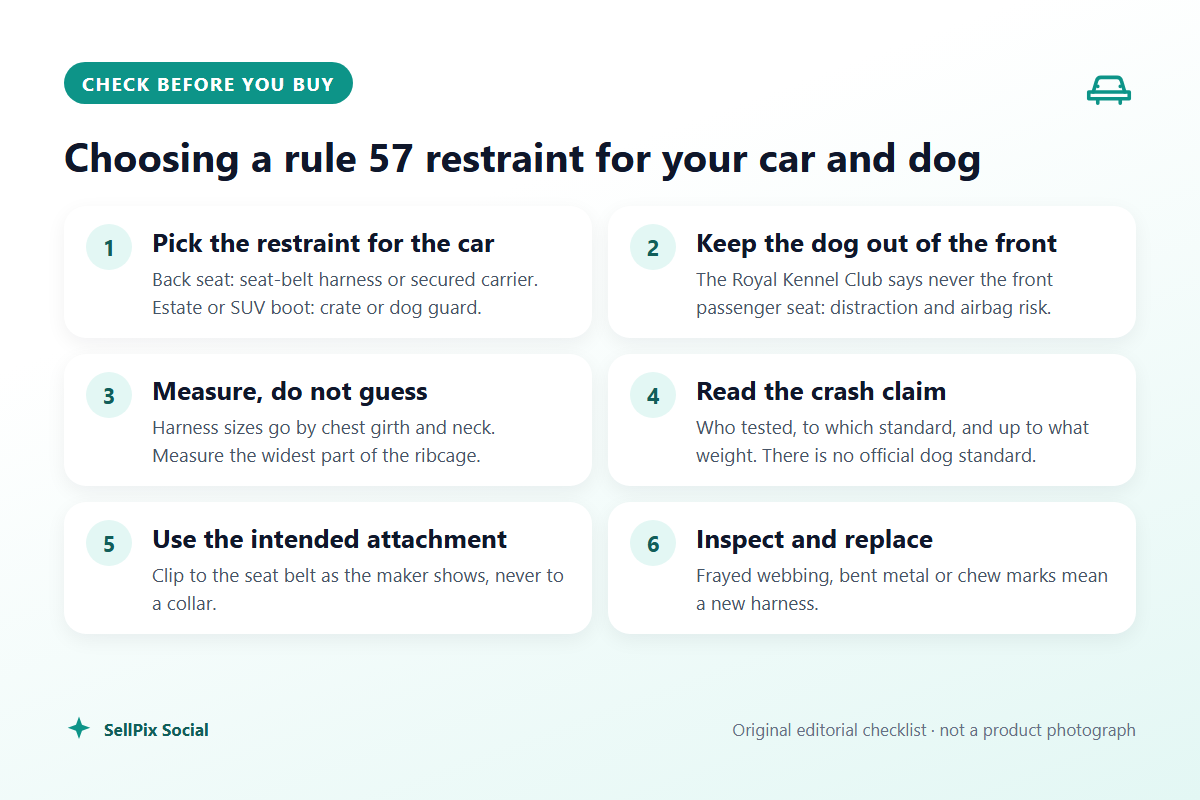
The Royal Kennel Club's travel advice lists the same family of options: a harness that plugs into a seatbelt port, a suitable travel crate tethered on the back seat or fitted to the boot, or a dog guard between the boot and the last passenger row. It also says your dog must never travel in the front passenger seat, because it may distract the driver and could be seriously injured if the airbags go off.
How to read a harness crash-test claim
Almost every car harness says "crash tested". That phrase alone tells you very little. Ask three questions of any listing or maker page:
- Who tested it? A named laboratory or university is more useful than "independently tested".
- To what standard? There is no official crash standard for dog restraints. EzyDog says so directly in its own warnings: there are "no official standards or test requirements" for canine car safety products, so makers borrow child-seat or vehicle-interior standards as a guide.
- Up to what weight? A rating applies to a maximum dog weight. Kurgo's US maker page says its Enhanced Strength Tru-Fit was tested to the US child restraint standard (FMVSS) for dogs up to 75 lb, while its size chart runs to 110 lb for the X-Large. The amazon.co.uk listing gives the limit as 34 kg. If your dog is heavier than the tested weight, the harness may still fit, but the crash claim no longer covers it.
Treat every crash result in this guide as the maker's statement. We have not seen the test reports.
Fitting a seat-belt harness properly
- Measure the chest girth around the widest part of the ribcage, just behind the front legs, and the neck if the maker asks for it. Kurgo's Large on Amazon.co.uk is listed for a 46-76 cm neck and 61-86 cm chest; EzyDog's maker chart runs from 28-64 cm girth (S) to 49-106 cm (L).
- Attach it the way the maker designed. Kurgo uses a short tether with a carabiner that clips onto the seat belt; the maker says this limits how far the dog can move forward. EzyDog's Drive has the car's own seat belt fed through two handles on the back of the harness, then buckled in.
- Never clip a car tether to a collar. In a sudden stop, the force should go through the chest plate, not the neck.
- Keep the tether short. The dog should be able to sit and lie down, but not reach the driver or the footwell.
- Inspect it regularly. EzyDog's instructions list frayed or cut webbing, deformed metal, UV damage, pulled stitches and chew marks as reasons to replace the harness.
Buying decision
Choose the Kurgo Enhanced Strength Tru-Fit if you want a harness that doubles as an everyday walking harness, your dog is within its stated 34 kg crash-test limit, and you are happy to use a tether between the harness and the seat belt. Choose the EzyDog Drive if your dog will mainly wear it in the car, you prefer the seat belt routed through the harness rather than a separate tether, and you want a maker that sets out what its crash claim does and does not mean. Skip both and look at a strapped-down crate or a fitted dog guard if your dog is very large, will not settle in a harness, or travels in the boot of an estate or SUV.
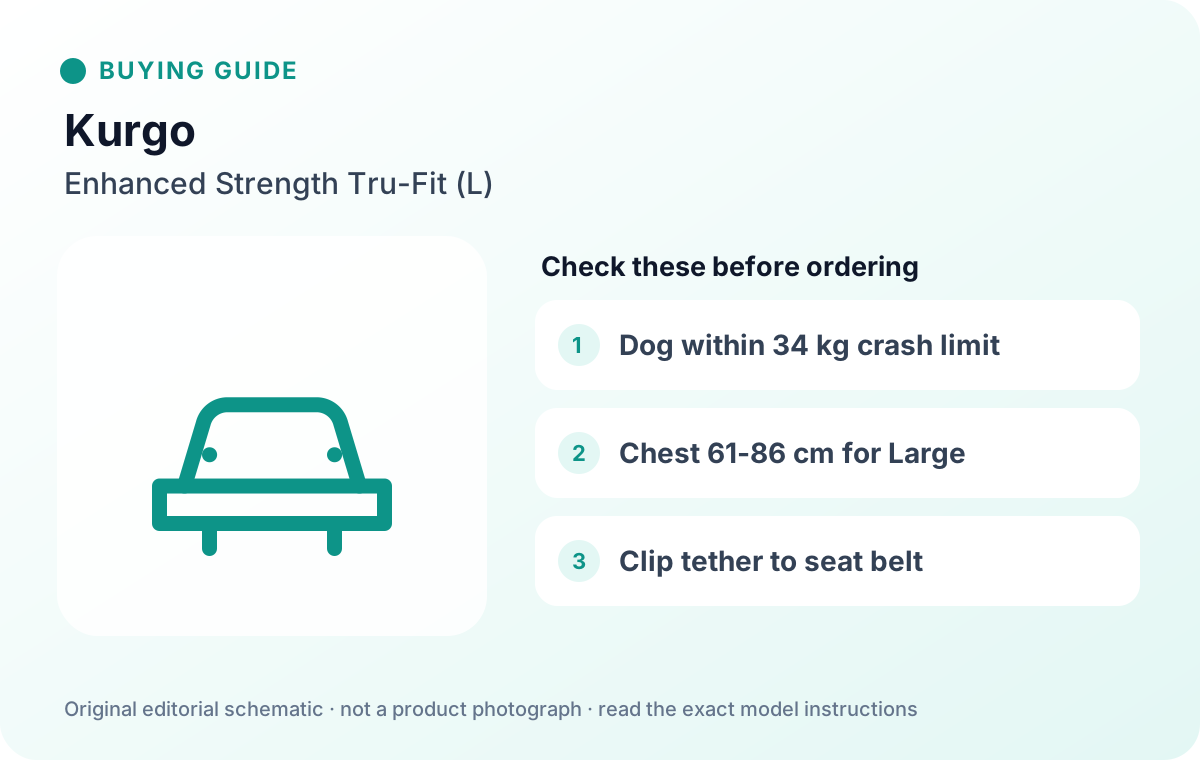
Kurgo Enhanced Strength Tru-Fit Dog Car Harness with Seatbelt Tether, Black, Large
A padded car harness with five adjustment points and an included seat-belt tether. The UK listing says it was crash tested at a university facility following child car seat standards for dogs up to 34 kg.
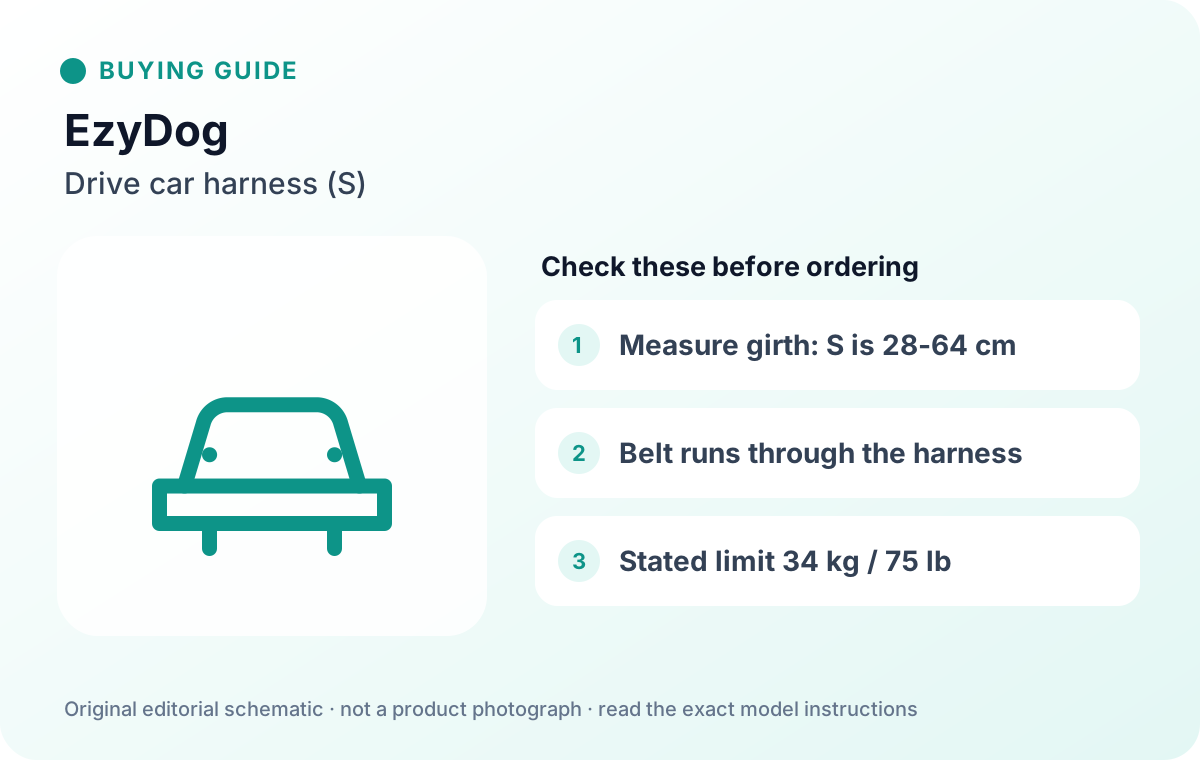
EzyDog Drive Car Harness, crash tested up to 34 kg, Small
A dedicated car harness that the vehicle seat belt passes through. The UK listing says it is crash tested up to 34 kg; EzyDog says it was tested against EU, US and Australian standards and certified by independent automotive engineers.
| Kurgo Enhanced Strength Tru-Fit (Large) | EzyDog Drive (Small) | |
|---|---|---|
| How it attaches | Included seat-belt tether with carabiner | Car seat belt runs through two handles on the harness |
| Stated crash-test limit | Up to 34 kg (UK listing); 75 lb on maker page | Up to 34 kg / 75 lb (UK listing title) |
| Stated test basis | University facility, child car seat standard (FMVSS on maker page) | Maker: EU, US and Australian standards, certified by independent automotive engineers |
| Sizing on this ASIN | Neck 46-76 cm, chest 61-86 cm | Small; maker chart S 28-64 cm girth |
| Everyday walking | Yes, front no-pull D-ring | Double D-rings for getting in and out; built for the car |
Before you order
- Measure your dog and choose the size before you click; each size of both harnesses is a separate listing, and the links here go to Kurgo Large and EzyDog Small.
- Check your dog's weight against the stated crash-test limit, not just the size chart.
- For Kurgo, confirm the listing says "Enhanced Strength" and includes the seat-belt tether.
- Check that your rear seat belt buckle is free and easy to reach; some child seats or ISOFIX bases block it.
- If your dog will travel in the boot, measure the boot floor and height before choosing a crate or guard instead.
FAQ
Is it illegal to drive with an unrestrained dog in the UK?
Rule 57 uses advisory wording, so not following it is not an offence by itself. The Highway Code introduction says the Code, including its advisory rules, can be used in evidence in court proceedings under the Traffic Acts, so a loose dog that distracted you could be held against you. Check your car insurance policy wording too.
Can my dog sit in the front passenger seat?
The Royal Kennel Club says a dog should never travel in the front passenger seat because of distraction and the risk of serious injury if the airbag deploys. The back seat or a secured boot set-up is the safer place.
Is a dog guard enough on its own?
A dog guard keeps a dog in the boot from coming forward into the cabin, which is one of the methods rule 57 names. It does not stop the dog being thrown around inside the boot, so for long trips some owners pair it with a crate.
Does "crash tested" mean the harness meets a UK standard?
No. There is no official UK or EU crash standard for dog restraints. Makers test against child-seat or vehicle standards they choose themselves, so check who tested, which standard and up to what weight.
Can I use a normal walking harness with a seat-belt clip?
A walking harness is not designed for crash forces. If you use a seat-belt tether, use it with a harness the maker sells for car use, and never with a collar.
How we researched this
On 10 October 2026 we read the Highway Code rules about animals and its introduction on GOV.UK, the Royal Kennel Club's advice on travelling with your dog, the Kurgo maker page for the Enhanced Strength Tru-Fit and EzyDog's UK page for the Drive harness, and checked both product listings on Amazon.co.uk. We did not buy, fit or crash test either harness, and we have not seen the makers' test reports, so crash results are reported as maker statements. A Ruffwear Load Up harness was in our original plan, but we could not find it sold on Amazon.co.uk, so we compared the EzyDog Drive instead. Buying links and any commission relationship are disclosed on this page.
Sources
- GOV.UK – The Highway Code, rules about animals (47 to 58)
- GOV.UK – The Highway Code, introduction (MUST rules and use in evidence)
- The Royal Kennel Club – Travelling with your dog
- Kurgo – Enhanced Strength Tru-Fit dog car harness (maker page)
- EzyDog UK – Drive car harness (maker page)
- Amazon.co.uk listing, ASIN B0064ACNLO
- Amazon.co.uk listing, ASIN B01MDOZ9L9
Related guides

SureFlap vs Cat Mate Elite: which microchip cat flap should you buy?
Both flaps read your cat's own microchip and keep neighbourhood cats out. SureFlap stores more cats and accepts more chip types; the Cat Mate Elite 355W adds a built-in timer and an LCD display. Here is how to choose by household, routine and where the flap will be fitted.

How to brush your dog's teeth: a step-by-step start and the right toothpaste
Start with a taste of pet toothpaste, then gum touches, a finger brush and finally a dog toothbrush, over a few weeks. This guide follows PDSA's sequence, explains why human toothpaste is out, lists the signs that need a vet rather than a brush, and looks at two starter products on Amazon.co.uk.